By The Rev. Frances Drolet-Smith, Oblate, SSJD
As we move deeper into the season of Epiphany, the stories we hear remind us of the myriad of ways God makes himself known to us; how God’s presence is made manifest – that’s what the word Epiphany means. The Epiphany star that hung over Bethlehem was the sign that God had sent his son. By that star, God was speaking forth from the heavens for all the world to hear. And those who had followed that star, the sages from the east, experienced an epiphany when they entered that humble house – there they met God’s son, face to face, and worshipped him.
The Gospels are full of moments of epiphany in which God becomes obvious in our midst, and we’ll read more of these stories in the coming weeks of Epiphany season.
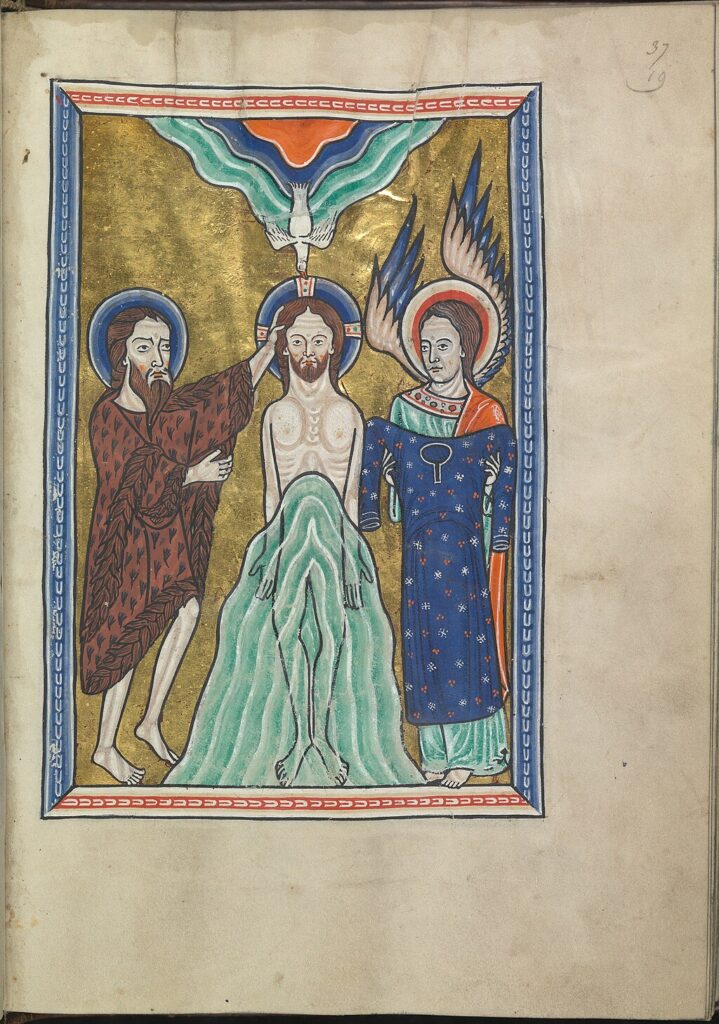
In our Gospel reading today, Jesus arrives at the Jordan requesting baptism from his reluctant cousin, John. Coming up out of the waters, “suddenly the heavens were opened to him and he saw the Spirit of God descending like a dove and alighting on him. And a voice from heaven said, ‘This is my Son, the Beloved, with whom I am well pleased.’” Heaven and earth are brought together in that instant, and Christ is revealed before our very eyes. His mission and ministry become crystal clear. We know who he is, why he’s come.
“This is my Son, the beloved.” These words, or ones very much like them, are proclaimed more than once in the Gospels, almost like exclamation marks emphasizing the role and reality of Christ. We find them repeated at the Transfiguration story midway through Jesus’ public ministry when he is seen by the disciples in the company of Moses and Elijah. Later, the centurion at the foot of cross comes to the same epiphany. He exclaims that Jesus was indeed “God’s Son.”
In these signs, God is speaking, calling people to listen, but what are we to make of these epiphanies for ourselves today? For one thing, they are sobering reminders that Jesus is more than just our brother, more than simply a friend we can turn to when we’re seeking a listening ear, more even than a prophet. These signs tell us that in Jesus, we see God made one of us. The Good News is that he was born into our world – he shares our human life and experiences. As we read of Jesus’ journeys throughout Galilee and beyond, as we listen closely to the stories and parables, we are emphatically reminded of where all this is coming from and where it all leads.
What this all means for us is also Good News, for if the Father is well pleased with Christ, his Son – he is well pleased with us too, his children by adoption. That is the promise made to us in our own baptism. As Peter writes in our second reading today from Acts, “God shows no partiality…anyone who fears him and does what is right is acceptable to him.” That includes us.
Our own Baptismal Covenant reminds us that we are called to “seek and serve Christ in all persons,” loving neighbor as our selves. When we came up from the water of our own baptism, whether recently or decades ago, we came up from those waters a new person in Christ, a child of God called to make Jesus manifest – or known, in our world today. Our baptism unites who we are today with Christ himself, the “Beloved” of God, baptized in the Jordan River centuries ago.
Christ dwells with and in us today – still here to be seen and discovered by those who, like the Magi, are willing to journey far from what they know, from all that is familiar, in their quest for deeper understanding and knowledge. Like the Wise Ones from the East, we’re called to leave the comfort of our preconceptions and prejudices to be willing to look for Jesus in places others refuse to enter, free from personal bias. Maureen Sullivan, a Dominican Sister of Hope writes, “God became a human being so that we would not seek him in the hereafter but in the face of our neighbour.”
The Magi brought gold, and frankincense, and myrrh. Equally precious is the gift of ourselves as we encounter Jesus alive and present in the elderly, children, and all the vulnerable and defenseless people of our world.
Christ is made manifest in the bread and wine, which we struggle in faith to recognize as his body and blood. Christ is present whenever we turn to him in confident prayers of thanksgiving and in those times when we find ourselves without words and on the point of despair. We encounter him in the quiet of our hearts and in the throb and busy-ness of our lives. ¶ But Christ is not ours only – a possession to hold or keep. Paradoxically, when we experience his absence we come to know the importance of bringing his presence to others. That’s the Epiphany challenge of our Baptismal Covenant – to know Christ and make him known – and in turn to enable others to know they too are God’s beloved. Imagine what impact there would be on the world if everyone knew they were loved by God?
Each celebration of the Eucharist begins with the prayerful acknowledgement, “…to you all hearts are open, all desires known, and from you no secrets are hidden.” We recognize that God knows us and has always known us – as the psalmist says, God “knit us together in our mother’s womb.” As we are known by God, so must we now become for others an epiphany of Christ’s presence in our world today.
This great feast of the Baptism of our Lord that we celebrate as an epiphany, invites us to rejoice that he has come to the whole world, to rejoice in the death to our own self-interest that we have undergone in baptism, and to rejoice in leading the new life that is now made possible because we have become one with Jesus our Lord. May we so live, and may we so love our Lord and one another, that we may, by our faithfulness, bring healing the world.