By Sister Doreen, SSJD
I found myself pondering once again one of Rumi‘s quotes:
You were born with potential.
You were born with goodness and trust.
You were born with ideals and dreams.
You were born with greatness.
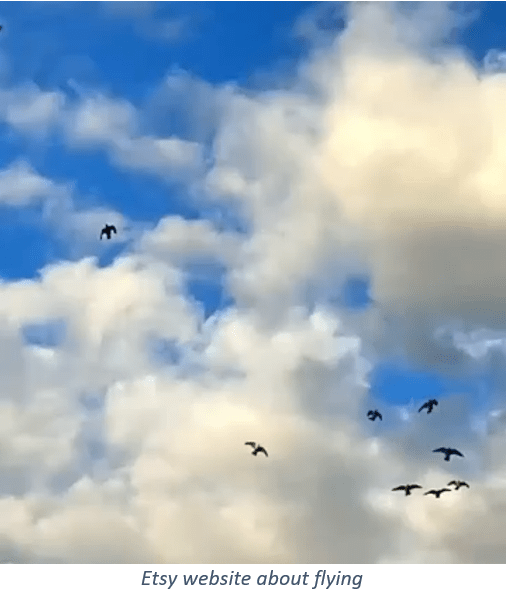
You were born with wings.
You are not meant for crawling, so don’t.
You have wings.
Learn to use them and fly.
As I thought about Rumi’s quote, I found myself thinking of a time in my own life when I really was crawling through life – missing the stars, the beauty, the magic that was all around me. Caught up in a wintery season of seeming burnout and anxiety, I had the feeling of “crawling through life” or just going through the motions rather than truly living. I began to sense the weight of this both physically and spiritually.
It was while praying the psalms, Psalm 13, that it began to re-awakened in me a sense of change. That psalm is a lament, a deep lament: “How long, God? Will you forget me forever? How long will you hide your face from me? How long must I wrestle with my anguish and wallow in despair all day long? How long will my enemy win over me?” Out of lament, my deep lament, that same psalm goes on, “Look at me! Answer me God, my God! Give light to my eyes, lest I sleep the sleep of death, lest my enemy say, ‘I have prevailed,’ lest my foes rejoice when I fall.” Deep in lament, when you reach to bottom, and find yourself resting now, recalling past experiences and some resilience learned and are face to face with your faith: you also find yourself actually resting, most amazingly, in the hands of God. That psalm goes on, my lament goes on, “I trust in your love; my heart rejoices in the deliverance you bring. I’ll sing to you, God, for being so good to me.”
What kind of spiritual practice can come to our aid in our winter seasons of life? The psalms are a ready resource and so is choice. We need to create our own patterns of bringing hope and trust out of our laments. Our own mandala’s, our own sacred words that we keep in the pockets of our hearts, our own songs that we sing to lift us up and move us on. All of us need spiritual disciplines that can bring us to that place where we can say, out of the depths: I’ll sing to you, God, for being so good to me!
There is a beautiful story by Trina Paulus called “Hope for the Flowers: a tale partly about life, partly about revolution, and lots about hope.” In her introduction she writes: “This is the tale of a caterpillar who has trouble becoming what he really is. It’s like myself – like us.” She writes: “it is a book to the ‘more’ of life – the real revolution.” I share excerpts, parts, of that story with you.
“Once upon a time a tiny, striped caterpillar burst from the egg which had been home for so long. ‘Hello world,’ he said. ‘It sure is bright out here in the sun.’ ‘I’m hungry,’ he thought and straightway began to eat the leaf he was born on. And he ate another leaf … and another … and another. And got bigger … and bigger … and bigger. Until one day he stopped eating and thought, ‘There must be more to life than just eating and getting bigger. It’s getting dull.’ So, Stripe crawled down from the friendly tree which had shaded and fed him. He was seeking more. There were all sorts of new things to find. Grass and dirt and holes and tiny bugs – each fascinated him. But nothing satisfied him. When he came across some other crawlers like himself, he was especially excited. But they were so busy eating they had no time to talk – just as Stripe had been. ‘They don’t know any more about life than I do,’ he sighed.”
The story goes on as Stripe follows ‘the crowd’ of other crawlers, all climbing up a pillar but no one really knowing why, where they were going, or what they would find at the top, all the while wondering. A comment repeated over and over again in this story caused me to pause and take note: “Since there’s no way to find out I decided it wasn’t important. No one seems to worry about where we’re going so it must be good.” It sounded so familiar, and so unhelpful in my own circumstances and search for meaning. The closest to finding meaning was Stripe meeting another crawler called Yellow, and too tired and worn out climbing and fighting to get to the top they drop out and begin to crawl around in the grass again together. And still after awhile Stripe couldn’t help wondering, “There must be still more to life.”
After many attempts at following others: “One day a grey-haired caterpillar hanging upside down on a branch was a surprise. The caterpillar seemed caught in some hairy stuff and to the question, ‘Can I help you?’ gave the answer ‘No, I have to do this to become a butterfly. It’s what you are meant to become.'”
This comes as a difficult revelation: “How can I believe there’s a butterfly inside me when all I see is a fuzzy worm?” Again I thought, how familiar a question, how can I believe I am the beloved of the Beloved … and yet to let go of everything – “’It looks like I’m hiding, I know, but a cocoon is no escape. It’s an in-between house where the change takes place. It’s a big step since you can never return to caterpillar life. During the change, it will seem to you or to anyone who might peek that nothing is happening – but the butterfly is already becoming. It just takes time.’” The challenge, the invitation for you and for me – to let go of everything, to take the big step and be willing to change, to continue to seek the more of life … we know we are not meant for crawling!
Margaret Silf writes in The Wisdom Years: “Like the butterfly, we know that the caterpillar life is not the end of the story … that just when we think that we are hopelessly disintegrating something amazing may be about to happen. We know that transformation is possible, because we have experienced it before” … in our journey through life.”
There have been so many times in my journey when Psalm 55 comes to my rescue! “When I shake with fear. I shudder from head to foot. ‘Who will give me wings,’ I ask, ‘wings like a dove? Get me out of here on dove wings. I want some peace and quiet …’” (Message translation) It is in times like this that I remember I was born with wings, I don’t have to crawl through the wilderness! I can let go of everything and take the big step – and change!
When we can see the bigger picture, everything changes. We realize that gifts that we are born with, (potential, goodness, trust, ideals, dreams, greatness, and a myriad of other gifts too great to number) we begin to find our wings and experience exciting energy and a whole new outlook on life – we come out of winter times into spring and summer times and once again can take to heart Rumi’s comment – ‘you were born with wings; why prefer to crawl’.
Sometimes we don’t realize our true potential until we let go of our long-held securities. Finding our authentic self is a transformative, hard work of a lifelong process, of shedding social expectations, training, and fears to live in a way that supports our true values, passions, and inner voice. This journey involves moving from an “adaptive self” which conforms to please others—to a “core self”, or my innermost being, characterized by honesty, courage, and vulnerability – the story says he had to let go of everything! And so it is with us – we were born with wings.
To ponder Rumi again:
You were born with potential.
You were born with goodness and trust.
You were born with ideals and dreams.
You were born with greatness.
You were born with wings.
You are not meant for crawling, so don’t.
You have wings. Learn to use them and fly.
In her book My Soul Feels Lean, Joyce Rupp writes in a poem called “Butterfly”:
As I lay there, slowly awakening, the image of new hatched butterflies came to me –
How they hang there and wait as the blood fills out their fresh wings.
This morning, I was the butterfly allowing my sleepy self to rest, to wait, to fill with life
To ready my wings for the day. Today I pay attention to how I need to care for self.
Yes! Yes! “Arise shine for your light has come, and the glory of the Lord is risen upon you.” Isaiah 60:1.