By Sr. Constance Joanna, SSJD
“I came that they may have life and have it abundantly.”
Jesus came to offer us abundant life – not just life, but life I abundance, overflowing with beauty and love and joy. Abundant – “more than we can ask or imagine” as we say at the end of each Eucharist.
The Good Shepherd is an image of caring, of motherly nourishment and comfort, of fatherly strength and protection. Our Creator God became a human, a shepherd if you will, so that no matter how dark the world or our lives may be, there is also hope of resurrection now, not just in the life to come.
In this Sunday’s liturgy, we are just halfway through the Easter season. In the three weeks since we celebrated Jesus’ resurrection, a lot of life has happened – for each one of us personally as well as in the world around us. In the political sphere, there seems to be more and more death – death of people at the mercy of dictators and those who wish to be dictators – death of values, death of honoured institutions, death of hope. So much grief. And yet we celebrate resurrection, renewed abundant life for ourselves and our world. We need to do this because it is only by letting the good in that we can drive death and evil out. This not just a theological or psychological concept – it’s a principle of nature.
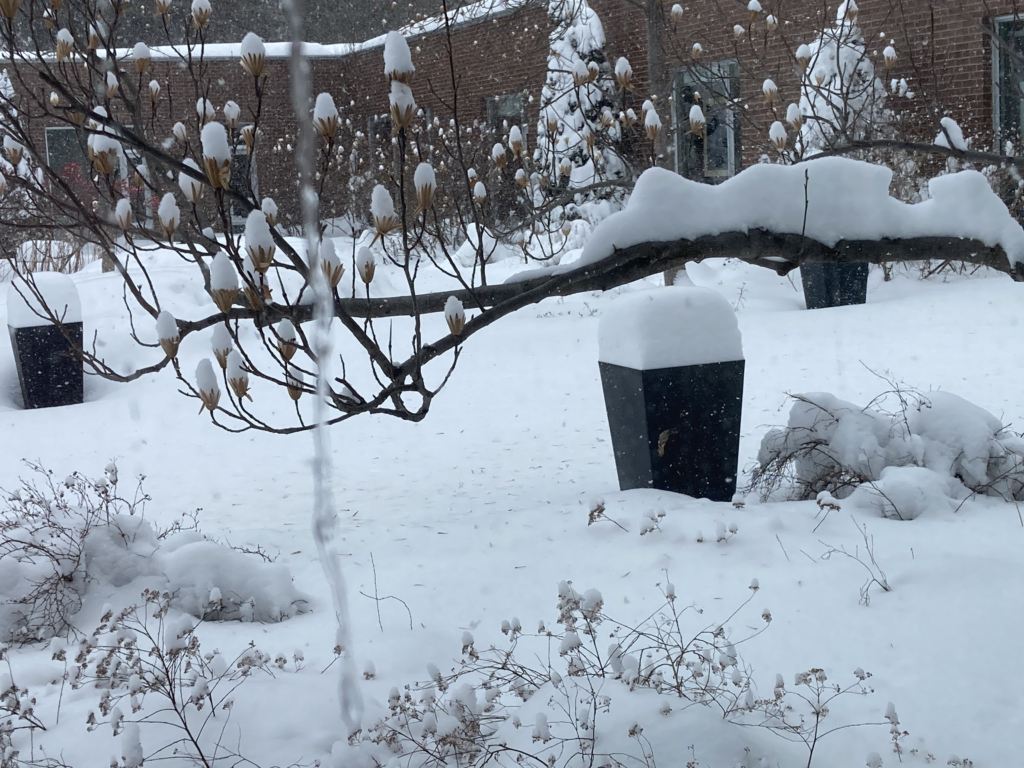
For instance, when I’m having breakfast in the morning, I watch and gaze in wonder at what is happening just outside the Refectory window in our courtyard with the large tulip tree. Day by day throughout the year I see life growing, morphing, maturing, resting, until in the spring new life bursts forth and the cycle starts again.
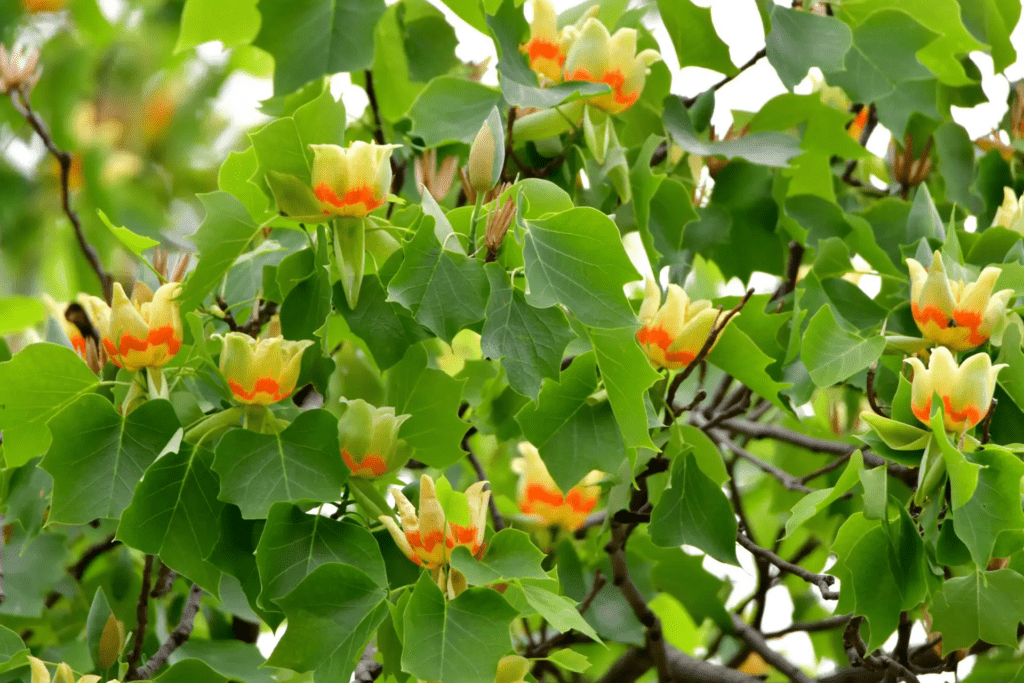
In the early summer, the tree blossoms with beautiful greenish-yellow flowers that resemble tulips. In the fall, when the tulip-shaped leaves fall off the tree, the beautiful seed pods, like miniature brown cups, remain undeterred by rain or wind or cold, firmly attached to the branches. In the winter when it snows, these seed pods fill up with snow and look like fluffy white snow cones on the tree. When it warms up in the spring, you might expect to see the seed pods finally fall off to make room for new growth, but they do not budge until the new leaves actually push them off the branch, like mother birds pushing their wee offspring out of the nest.
The new growth is what finally bumps off the old pods in order to start the miraculous cycle over again.
That’s exactly where we are in these 50 days of Easter. We begin a new life while the old grief lingers. We look back to John’s description of Jesus as the Good Shepherd, the one who cares for us and provides what we need. And yet the first reading from Acts is looking forward another three weeks when we will celebrate the feast of Pentecost. Like the disciples after the Resurrection, who looked back on things Jesus had said and suddenly found new meaning in them, we recall Jesus’ comments about the Good Shepherd and realize that those words are not just about Jesus, they are about us. Jesus’ resurrection brings new like and hope for us and in fact charges us to go out and serve, to become shepherds ourselves.
So let’s look forward to the Day of Pentecost, when we will hear the story of how the Spirit came down and pushed the disciples, who were gathered uncertain and fearful of what would come next, out of their nest and into the streets where they would miraculously proclaim Jesus’ death and resurrection to the crowds gathered to celebrate the Jewish feast of Pentecost. People from all over the known world were present and heard the gospel in their own languages. It was like an instant revival meeting with simultaneous translation, as Peter began to preach to the crowd about Jesus. The passage from Acts this morning is about the impact of that preaching.
Peter has been transformed from a waffling, terrified, undependable and unfaithful disciple to a new role as the first Shepherd of the church. On that day, we are told, 3,000 people were moved by his preaching to be baptized, “and they continued in the apostles’ teaching and fellowship, in the breaking of bread, and in the prayers.” In other words, they didn’t just get struck by some spiritual lightening and got all enthusiastic and then when the feast was over went home forgetting it all. No, they were forged into a community, and this passage gives us their first “Rule of Life.”
“They continued in the Apostles teaching and fellowship in the breaking of bread, and in the prayers.” That is, they studied what the Apostles taught, they read the scriptures, they prayed together, and they shared in the Eucharist, fed in their faith by the body and blood of Christ. They held everything in common, and they sold their possessions and gave the proceeds to the poor. They spent time in the temple praying, and they ate their at home “with glad and generous hearts, praising God and having the goodwill of all the people.” And then comes the most hopeful part – “day by day the Lord added to their number those who were being saved.” Their life was lived abundantly, they had plenty of resources and love to share, and that attracted more and more people to join them.
That’s the bedrock of all Christian communities, whether a monastic community like ours or a parish community, or a marriage, family, a prayer group or Bible study group. No spiritual growth is possible without our being planted in the soil of a community that reads, studies, prays, and shares communion with one another.
That’s what shepherds are there to nourish. And that’s why prayer for vocations in the church, whether lay or ordained, is so important. It just so happens that this Sunday has been designated Vocations Sunday in the Anglican church in Canada. We are desperately in need of priests, deacons, dedicated lay people, and sisters and brothers in our monastic communities. Who else will shepherd the rest of us – encourage us, teach us, keep us on the right track when we get off it?
So on this Good Shepherd Sunday, let’s remember to look back – at Jesus’ words about shepherding in his name; at his “new commandment” to love on another and to share his body and blood, at his promise to be with us always as he promised at the Ascension, and at the fulfillment of the Holy Spirit, who enables us to be shepherds to God’s people.
In our baptismal covenant, the first question we are asked is “will be continue in the Apostles teaching and fellowship, in the breaking of bread and the prayers? Then we are asked to commit ourselves to repentance when we sin, to serving others, to work for justice and peace, and to care for creation. The tulip tree cannot survive branch by branch on its own. It’s miraculous production of new babies every spring is only possible while the branches are firmly attached to the tree, and as Jesus taught in another part of the gospel, we too can only survive, can only experience new and abundant life, if we do it together. May we all be shepherds to one another.