By Sister Doreen, SSJD
August 15th is the feast day that commemorates Mary at the end of her earthly life: as the collect indicates (BAS page 419). “O God, you have taken to yourself the Blessed virgin Mary, mother of your incarnate Son …”. For me this is a feast day where we have an opportunity to ponder Mary, now an old woman, in the spirituality of the second half of life.
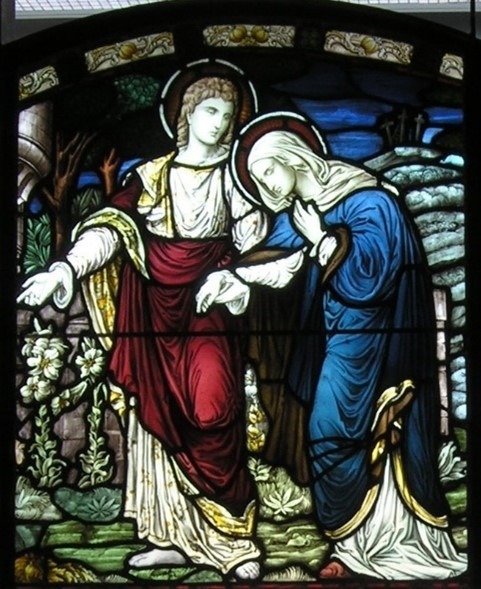
Today I would like to share some thoughts about Mary as an old woman, a woman we are introduced to in Luke as the favoured one, the beloved in whom God is well pleased – the one who is ‘beautiful with God’s beauty, beautiful inside and out’ (Message translation). Mary is also the one who has at least seven feast day attached to her name, either directly or because she was intricately involved: Mary’s birth, the Annunciation, the Visitation, the Incarnation, the Presentation, the Crucifixion and Resurrection, and todays feast day: the Falling Asleep or Dormition (death) and her being ‘taken to God’s self’ as the prayer puts it. For all this seeming popularity, Mary is a woman wrapped in silence. There is very little known about Mary and a great deal that has been said about her – however there remains a hiddenness and solitude about her. She is a woman of the heart, who treasured and pondered things in her heart.
In the book A Woman Wrapped in Silence written by J. Lynch: “And peace that made its quietness in her was peace God gave, since she had made a place for it by tired hands and a heart that did not tire. A woman wrapped in silence, and the seed of silence, the ache of silence was her heart that tried to give all that it had to give, and ever more. … And still was here a woman wrapped in silence, and the words were closed within her spacious heart for pondering.”
Mary – a women of the heart, of silence and prayer, called and chosen, a woman of ‘Fiat’ and ‘Magnificat’, God-bearer to the world – someone we can talk of being like, for she mirrors in us the image and likeness of God that God so wills to be found in us all. Someone called and chosen, someone of the heart, of silence and prayer, someone who lived in partnership with God, someone who lived discipleship. Someone of Fiat and Magnificat.
Fiat means quite simply “YES” –
- Yes to an invitation to trust in God
- Yes to a call to experience God in deeper ways
- Yes to a call to ponder the Word, to welcome the Word even if we don’t fully understand it
- Yes to sit with the words and wonder about them
- Yes in the good times and in the difficult times
- Yes in joy and in sorrow
Magnificat is a song of thanksgiving to God for all the wonderful things that God has done for her and is:
- Gratitude as a call to live as spiritual adults
- Gratitude as a model of love, trust, and service
- Gratitude as a call to mercy and justice, righteousness, and peace
- Gratitude as a challenge to stepping into the unknown future out of trust in God
- Gratitude that needs to be practiced over and over again
- Gratitude as a trust when the way ahead is unknown, or difficult, or painful
A Fiat response to life is also a mystery and is calling out for her and for us all the time. Mary’s fiat I believe was something that she was challenged to repeat throughout her life – daily she renewed her yes, over and over again.
A Magnificat response to life, a gratitude response for God’s promise ‘ I will never leave you or forsake you’ to every aspect of life and death, is also a mystery, to repeated over and over again throughout life, whether it arises out of thanksgiving or lament.
Mary’s first fiat at the Annunciation and her first Magnificat at the Visitation to Elizabeth as I pondered these, I believe that Mary’s yes and perplexity at the Annunciation stayed with her throughout her life. Mary continued to be puzzled whenever she was confronted by signs and hints of who Jesus was and what Jesus was meant to do. But she was always patient in her puzzlement: “Mary treasured all these things and pondered them in her heart”. Today’s feast day gives us a chance to ponder Mary’s life as she grew older, and gave rise to my own pondering and questions as I get older. I thought of what it must have been like when Joseph and Mary took Jesus to the temple and Simeon talking about a sword piercing Mary’s own soul too, of what it was like when Joseph fled with Mary and the babe Jesus to safety in Egypt; of what it must have been like when they lost Jesus for several days only to find him in the temple listening and asking questions, of what it must have been like as they followed his ministry as he travelled throughout the country side. I made me look at my own life, and the different experiences and challenges and difficulties that were part of my own journey – what were my ‘Fiat’ and ‘Magnificat’ like as I looked back and also what I wish them to be like today and in all the tomorrows to come?
And as I pondered my question ‘What about Mary’s fiat and Magnificat?’ I found myself spending time with two incidents in Mary’s life.
What about Mary’s Fiat and Magnificat during loss and grief when Joseph died? Joseph, too, is someone wrapped in silence, very little is known about Joseph. I share a poem called an Ikon of St. Joseph the Worker written by Allison Holt, an Associate of the Sisterhood of Saint John the Divine from Victoria, BC who has since died. She wrote:
“Seen at a glance, the quiet, complete change of St. Joseph, I cannot find words to say that there stands a man who is so completely committed there is no explaining it. Quiet he sees a person coming and all he has is finding and unlocking God in that person. Time is not in charge, God is. The same hands which took care that Jesus should not be harmed in the carpenter’s tools while he was learning was the same concern he has to everyone. He knows that in God’s eyes all are free to be equal and loved by God on earth.”
For Mary, Joseph’s death was the loss of a loving companionship and partnership, of someone who had protected and loved and always been there – a man open to God whose own fiat throughout his life nurtured the safety and love and trust that created a real home for both Mary and Jesus and the family. Joseph gentle and strong. Joseph compassionate and obedient. Joseph of great spirit and great faith. Joseph who listened to the word and who listened in silence. He is gone, probably sometime during Jesus’ ministry, but for certain long before the Crucifixion when the disciple John takes Mary home with him. Within the mystery of Mary’s fiat and Mary’s Magnificat at this time, the loss of beloved Joseph, there is a time for her to weep. Mary’s lament at Joseph’s death, her fiat and her Magnificat giving voice to her grief and her sorrow, her anxieties … our Oblate Frances Drolet Smith in her article ‘Lament’ in the Diocese of Nova Scotia newspaper said that “in life it is important to remember that there is value in the prayers of lament, they shape our relationship with God”. The writings of the prophets and the psalms are filled with laments that arise out of ‘yes and gratitude’.
What about her Fiat and Magnificat at the time of her son’s cruel death on the cross? When a mother must be there and to watch while their child dies a cruel death, the shock and the sadness, the confusion and anger, the tiredness, more tired than one could ever have thought possible from the trauma of it all, these are some of the feelings that people whose child has died have shared were part of their own experiences. And so they would have been for Mary. Within the mystery of Mary’s fiat and Magnificat at this time, there is a time to weep, to giving voice to her grief and her sorrow, and her anger.
Joan Chittister writes:
“Of all the expressions of human emotion in the lexicon of life, weeping may be the most functional, the most deeply versatile. The tears we weep show us our deepest, neediest, most private selves … what we cry about is what we care about … tears give life to the grief of endings, give them dignity and give them honour. What was , was good. What is to come is mystery. Once the tears have been shed that mark the loss then the changes can be made that mark the new beginning. … Every little death we die turns us into something new and washes us up on the sunlit shore of a different psyche, a person called by an old name but unknown even to ourselves.”
Mary, this woman wrapped in silence … the ache of silence that was her heart that tried to give all that it had to give, and ever more. She followed her son from Galilee to Jerusalem, stood with the others who witnessed his crucifixion, shared in the disciples’ community of prayer and watched with them for the coming of the Holy Spirit. This woman was a strong woman, perplexed but patient, willing to meet all of life, and hope through it all. Someone whose heart has been broken, whose life is vulnerable, whose love is all encompassing. People will come to that kind of person for help, people will confide in that kind of a person. This is how I see Mary in old age – an anawin (someone who has remained faithful to God throughout all that life brings) – and – an anam cara (a soul friend and blessing to all those around her).
Today we delight in the conviction that she who responded to God’s perplexing call with praise throughout her life, must already enjoy the reward of faith – and that she who gave the Son of God his human life has received all the fullness of the eternal life which he was born to give.
From A Women wrapped in Silence again:
“This was a woman wrapped in silence: and the shrine her thoughts made gathered her beyond her exile and enclosed a native place where all she loved could cancel banishment, and hold the votive pleading of her single prayer that asked to be only in that place where he will be, “To wait him here”. Alone. Alone. A women lonely in the silence and the trust of silence is her heart that did not seek, or cry, or search, but only waited him. We have no word of this sweet certainty that hides in her. There is not granted line writ meagre in the scripture that will tell … what she keeps within the silence. This is hers … and all the secrets hid beneath the long years’ long remembering. … (we) could find her old with what had passed, and worn with it … and in her old age, her spirit’s new Magnificat that is rejoiced again because he hath regarded her, and holy is his name. She was alone, and in her she could feel the flow of time that had begun and would go on, go on, to days, in silence, on and on. She was a woman now who was alone with time, and in her heart, the wait and ache of time.”
One of the comments that Richard Rohr made in his book Falling Upward that has stayed with me, and has often been part of my pondering Mary’s life is the following quote:
“Most of us tend to think of the second half of life as largely about getting old, dealing with health issues, and letting go of our physical life, but the whole thesis of this book is exactly the opposite. What looks like falling can largely be experienced as falling upward and onward, into a broader and deeper world, where the soul has found its fulness, is finally connected to the whole, and lives inside the Big Picture.”
With Mary, her coming to human fullness was through many different life experiences, difficult experiences – in fact against all odds and personal suffering as well those good blessings that friends and family bring. So too is this gift held out to us individually, in and with each other, and in all of creation.
TS Eliott, “East Cocker” :
Old (people) ought to be explorers
Here and there does not matter
We must be still and still moving
Into another intensity
For another union, a deeper communion
The second half of life is a journey and the goal of coming back home. Today we celebrate Mary’s heavenly birthday – an Ion of Fiat and Magnificat – an Anawin and an Anam Cara – and her joy of seeing face to face, even as we look forward to our own.
Yes! Yes! “Arise shine for your light has come, and the glory of the Lord is risen upon you.” Isaiah 60:1.