
By The Rev. Canon Joanne Davies, Oblate, SSJD
Forgiveness is God’s love and will for everyone. Jesus’ journey to the cross was for all. In being open to all this love we are to let our ego go… to die with Christ in our faith, where our true self with God may rise.
The theologian Robert Capon writes: “…if we insist on binding other’s debts upon them in the name of our won right to life – we will, by not letting grace have its way through us, cut ourselves off from ever knowing the joy of grace in us. ….The only thing that can keep us out of the joy of the resurrection is to join the unforgiving servant in his refusal to die.”
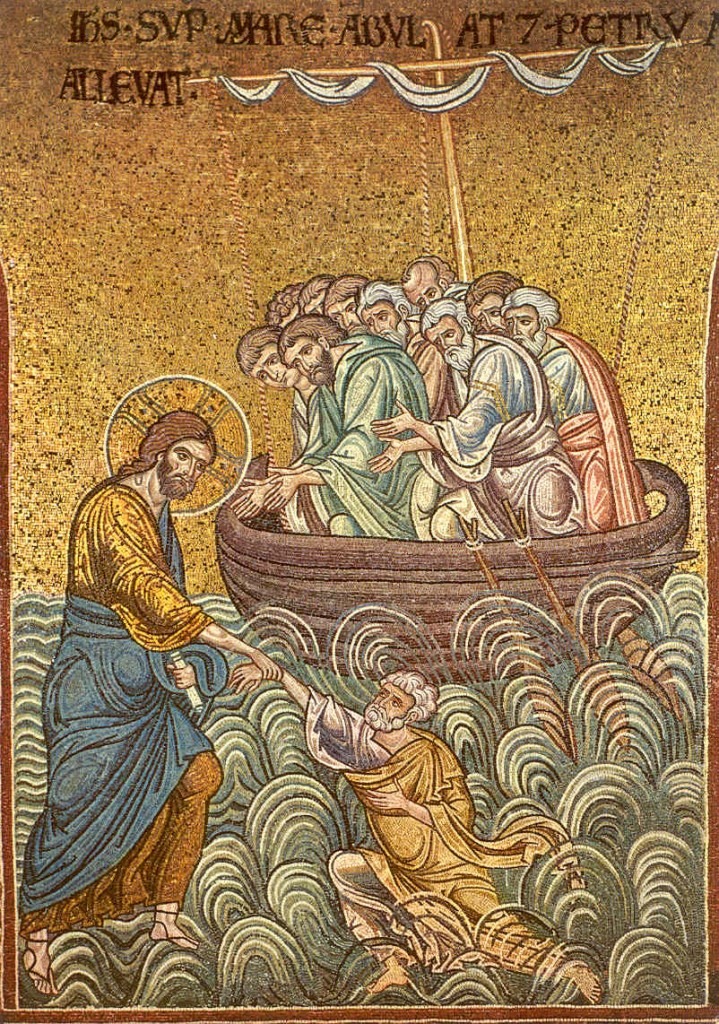
We receive a glimpse of the scope of God’s forgiveness touching our everyday earthly lives from our Gospel reading. Peter approaches Jesus with a seemingly innocent question, “Jesus, how many times should we forgive? As many as… seven? Seven times?” This follows last week’s Gospel reading about settling disputes in the church. When put in that context, Peter’s inquiry seems a clarifying question.
Peter wants to put a value on forgiveness. In Peter’s world, there is a transaction happening. Bookkeeping. Forgiveness, after all, costs something to the one doing the forgiving. Peter rightly imagines the human capacity for compassion crumbles when faced by repeat offenders. Surely, Jesus recognizes this and knows the perfect amount of forgiveness.
Jesus handles this inquiry by turning the whole concept on its head. Not seven times, Peter. Seventy-seven times. I used to be perplexed about Jesus definite number, till I realised a loving wry expression would be upon Jesus’ face. The preposterous number is another way of reminding us of our eternity of being beloved of God and our relationship with God and God’s desire for us to live well together. Just as he taught his followers to treat those who continued to hurt others as tax collectors or Gentiles, the very marginalised folks to whom Jesus gave his time, love, and care. Jesus turns human transactions, our bookkeeping life and revenge ideas upside down. God’s forgiveness doesn’t fit into this transactional system that Peter knows. The parable Jesus tells jolts us, with all its hyperbole, into reflection. Opens our eyes. Gives us questions. To what systems of transactions do we bind ourselves?
Sometimes, when we talk about forgiveness we turn it into something that we aim, or focus entirely, at the person who has hurt us. As something we have to learn to give someone. To make something right. The truth is we have little control over the making of things right. And sometimes relationships have to end. But what we can give is prayer for someone. We can realise our need to rely on God for help. To fully understand that Jesus was willing to give everything for us. As Jesus did…reliance on God’s love is where our forgiveness arises from. With God encompassing us, we can want goodness for the life of someone else. We can choose to forgive. Allowing our anger, hurt, even hatred to be released to God’s care. To acknowledge God loves the person who has done harm. And to know God will accompany our healing journey. God loves us.
In a gentle book called “The healing ministry” a Roman Catholic psychotherapist, Robert DeGrandis writes this… Forgiveness is a decision, not a feeling. …. A question that I am asked frequently is, ‘How do I know if I have forgiven absolutely?” When you pray for someone you are asking the Lord to bring goodness and good things to that person. The definition of love and prayer …are parallel – in prayer we are asking for what is best and love is wanting what is best. …when we pray for a person, our prayer becomes a manifestation of love in action. …Once we pray for a person sincerely, we can be certain we have forgiven them by an act of will.
We can come to this decision of forgiveness through prayer saying… Jesus help me to love and pray for those who have hurt me because I know you love and forgive them unconditionally as you Love and forgive me. I release into your healing light any resentment or unforgiveness I harbour toward them…
The first time I found myself able make the decision firmly in action to pray for my abusive husband … A wave of love and peace enveloped me. Pushing deeper I knew my festering lingering anger, hurt and shame was released and could be held by God…as I walked into healing, loved by God. And I had the hope, the faith inside of myself that my husband was being tended to by God. And that he was forgiven. The relationship between he and I could not be. But my decision to turn to God and to be open to the awareness of God loving him was the right relationship. There is a divine truth for me in my belief that forgiving others arises in prayers and the work of personal reconciliation leading to a decision of prayer for another… all imbued with God’s love, God’s will and a sign of the love Jesus spoke, lived and died for.
And when it comes to our own sins … God forgiving us. God loves our desire for forgiveness yet will always forgive even when we falter. The part we often forget even in the midst of faith is that forgiveness from God is something we have to learn to receive as true. This mean forgiving ourselves.
To repeat, God’s forgiveness isn’t transactional. As followers of Christ, we are called to be a people of forgiveness. We are not perfect. We are however on the journey to living the belovedness of God holds for us. This journey in Christ calls us to give ourselves the same prayer of compassion and forgiveness we offer for another.
Jesus wants Peter to hear and all disciples including us that forgiveness is a grace that transforms everything and everyone – how we relate to God, how we relate to each other, and how we judge ourselves.
God forgives you. Forgive others. Forgive yourself.
Peace.
Amen